


More people are reconsidering their relationship with alcohol, but that does not necessarily mean giving it up altogether. What was once treated as a rigid choice between drinking and abstaining has become more personal, flexible and dependent on the moment.
Non-alcoholic beer, wine and spirits have moved well beyond their niche beginnings. In 2025, the category generated $925 million in U.S. off-premise sales, growing 22% year over year. But the most meaningful shift is behavioral: 92% of people purchasing non-alcoholic beverages also purchase products containing alcohol.
This is not simply a story of consumers quitting alcohol. It is a broader redefinition of what, when and why people drink.
Non-alcoholic choices now sit within a fluid beverage landscape that includes full-strength and lower-alcohol products, functional drinks, premium sodas, sparkling teas and other adult beverages. As the market matures, brands must give consumers a positive reason to choose them, not merely a reason to avoid alcohol.
From Sober Curious → to Intentional Moderation
The non-alcoholic consumer is not one narrow demographic or fixed identity. Moderation is increasingly situational, shaped by the occasion, the desired experience and what someone wants to do next.
A consumer might order a cocktail with dinner, switch to a non-alcoholic beer later in the evening or avoid alcohol entirely when prioritizing sleep, exercise, focus or an early morning. Practices such as zebra striping and bookending reflect a more customized approach in which alcoholic and non-alcoholic choices coexist.
This also makes the story more complex than the idea that younger generations simply do not drink. Legal-drinking-age Gen-Z consumers are increasingly participating in the alcohol category, even as many continue to drink selectively and moderate across occasions. They are not necessarily rejecting alcohol. They are approaching it with different expectations around quality, control and experience.
The opportunity for beverage brands is not only to serve abstinence. It is to give people greater agency over how they participate.
From Social Norm → to Occasion Expansion
As moderation becomes more fluid, the occasion map for non-alcoholic beverages is expanding.
These products are no longer reserved for Dry January, designated drivers or explicitly sober spaces. They are appearing at sporting events, restaurants, celebrations, weeknight dinners and casual social occasions where consumers still want the ritual and flavor of an adult beverage without the full effects of alcohol.
That expansion changes the innovation question. A non-alcoholic product does not have to serve only as a direct replacement for an alcoholic drink. It can open a new time of day, food pairing, emotional need or social setting that the existing portfolio does not fully address.
For brands, that means moving away from asking only: Who does not drink?
And beginning to ask: When, why and how might someone want to drink differently?
Understanding these need states can reveal opportunities that traditional demographic segmentation misses. A consumer’s choice may have less to do with whether they identify as sober and more to do with how they want to feel during and after a specific moment.
“The rise of non-alcolohlic beverages follows a familiar path—successful brands aren’t just selling a drink, they’re selling a lifestyle. The brands that win will be the ones that create a strong identity, resonate emotionally and deliver a high-quality experience that consumers are proud to hold in their hands.” –Emily Flannery, Managing Director at LPK
From Bland Alternative → to Distinctive Experience
As the category matures, simply being alcohol-free is no longer enough to create preference.
Taste, quality and a credible adult drinking experience are becoming basic expectations, particularly when products are priced alongside their alcoholic counterparts. Availability, price and flavor remain barriers for the category, while premium-and-above products are driving growth across more established non-alcoholic beer, wine and spirits segments.
Brands must now decide what type of experience they are creating.
Some products replicate familiar beer, wine or cocktail rituals as faithfully as possible. Others move beyond imitation through culinary ingredients, unexpected flavor combinations, carbonation, texture or globally inspired profiles.
Both approaches can work. The common requirement is a clear and compelling reason to choose the product.
Consumers should understand what they are gaining, whether that is:
- A familiar ritual without alcohol
- A bold or more complex flavor experience
- A drink that complements food
- A premium social object
- A product that fits a specific mood or occasion
The strongest products are not defined solely by what has been removed. They create an experience with value of its own.
From Added Function → to Credible Benefit
Function is also becoming one potential source of value, with beverages promising benefits related to hydration, digestion, energy, mood, focus or relaxation.
But functional and non-alcoholic beverages should not automatically be treated as one category. Recent research suggests that consumers often choose alcohol-free analogues and functional “alcohol-adjacent” drinks for different reasons.
People commonly select non-alcoholic beer, wine and spirits to moderate their alcohol intake while continuing to participate in familiar occasions. Functional beverages are more likely to be driven by curiosity, specific benefits or the desire to experience a different kind of effect.
For brands, this distinction matters.
Adaptogens, nootropics and other ingredients should not be added simply because they are trending. There must be a credible relationship between the benefit, the beverage experience and the moment in which someone would choose it.
As functional claims multiply, clarity and trust become more valuable than an extensive list of benefits. The opportunity is not to make the product promise everything. It is to make the proposition easy to understand and believable.
From Standalone Innovation → to Portfolio Role
As non-alcoholic offerings become more mainstream, brands must determine the role they play within the broader portfolio.
Is the product:
- Extending a recognized brand into a new occasion?
- Giving existing consumers another way to participate?
- Recruiting a different audience?
- Creating a bridge between alcoholic and alcohol-free choices
- Establishing a proposition that needs its own identity?
The answer should shape everything from naming and architecture to packaging, distribution and communication.
Staying too close to the alcoholic offering can create confusion, particularly in a crowded cooler. Moving too far away can leave valuable recognition and trust behind.
The goal is not simply to launch a zero-proof version of an existing product. It is to create a clear, additive role that strengthens the total portfolio.
Bringing Bold Chelada Flavor to a New Format
Modelo Chelada® Limón y Sal Non-Alcoholic demonstrates how an established alcohol brand can move into the non-alcoholic space while retaining the equities consumers already recognize.
Developed with strategy and packaging design support from LPK, Modelo’s first non-alcoholic offering carries forward the master brand’s iconic visual language and the vibrant citrus and flavor cues associated with the Chelada portfolio.
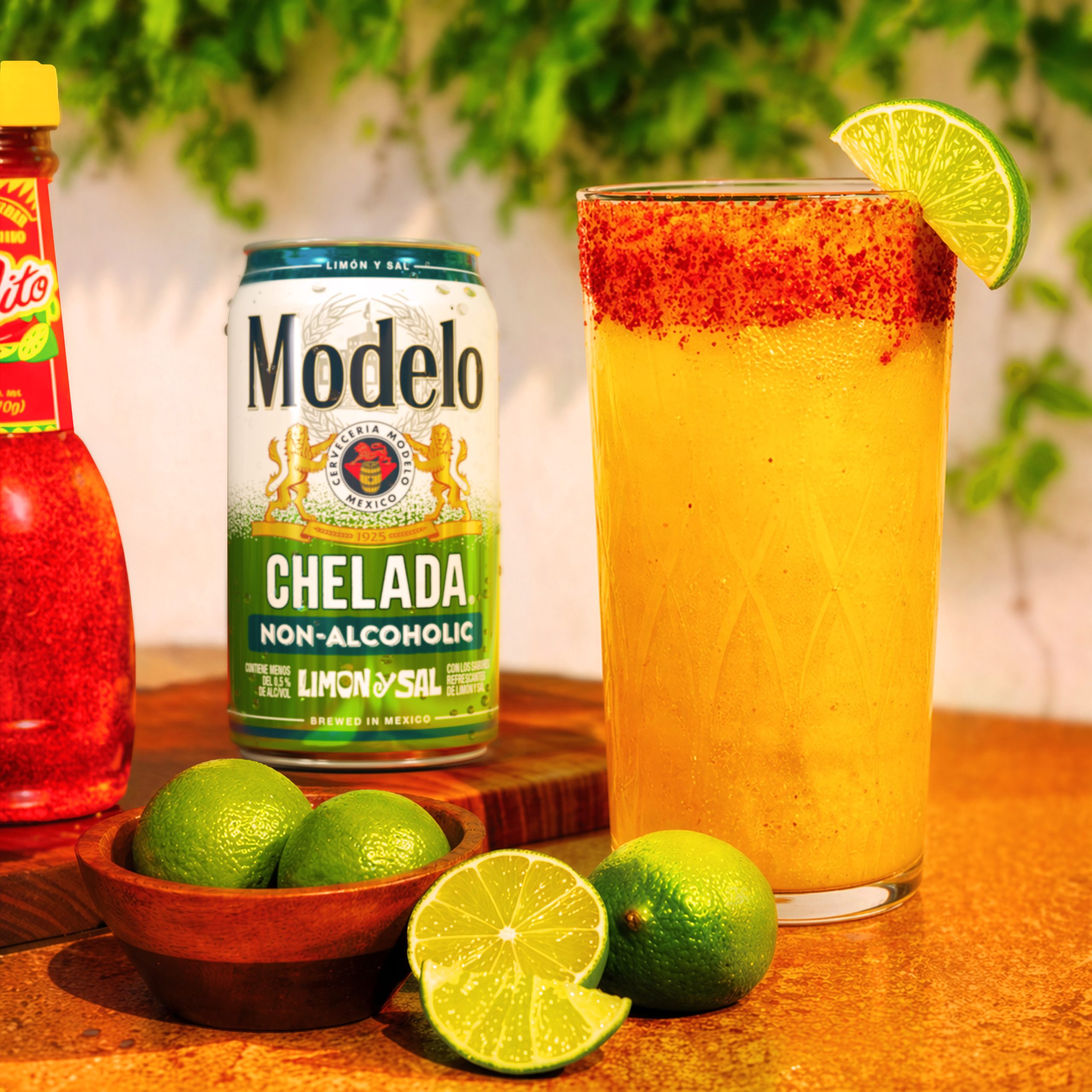
Introducing blue to the packaging creates clear distinction for the non-alcoholic format without disconnecting the product from the broader brand.
The result brings the authentic lime-and-salt Chelada experience to evolving moderation behaviors and new drinking occasions, while giving the product a clear role within the Modelo portfolio.

From Visual Appeal → to Meaningful Distinction
In a crowded market, attractive packaging is expected. The deeper challenge is creating an identity that quickly communicates what the product is, why it belongs in someone’s life and how it differs from the growing number of choices around it.
New brands need recognizable equities that can extend across flavors, formats and future innovation. Established alcohol brands face a different tension: retaining enough familiarity to transfer trust while creating unmistakable differentiation between alcoholic and non-alcoholic products.
Color can play an important role, but it cannot carry the entire navigation system.
Naming, hierarchy, product descriptors, brand architecture and distinctive visual assets must work together. This becomes especially important in physical coolers and digital environments where consumers make rapid comparisons and may be navigating unfamiliar products.
Brands also need to communicate beyond the package. Consumers must be able to imagine when, where and with whom the beverage fits.
The strongest identities do more than look distinctive. They build a recognizable world around the product and offer clear cues for participation.
“Non-alcoholic brands must think beyond just being an alternative. The most effective strategies borrow from traditional beverage branding, balancing authenticity, standout design and cultural relevance to create products that feel as essential and aspirational as their alcoholic counterparts.” –Kyle Schutte, Group Director at LPK
What Does the Next Phase of Non-Alcoholic Growth Require?
As non-alcoholic beverages become a more established part of the market, beverage brands should consider a few principles:
Map occasions, not just audiences. Understand when consumers shift among alcoholic, lower-alcohol and alcohol-free beverages, as well as the emotional and functional needs influencing each choice.
Define the portfolio role. Be clear about whether the product extends an established brand, recruits a new consumer, unlocks an occasion or creates a proposition that should stand independently.
Give consumers a positive reason to choose it. Lead with flavor, ritual, function, identity or experience rather than relying solely on the absence of alcohol.
Design for clarity and distinction. Transfer the right equities while making the product type, alcohol content and primary benefit immediately understandable.
Treat function with discipline. Connect ingredients and claims to a credible need state. More benefits do not automatically create a stronger proposition.
Build for expansion. Develop a brand and packaging system capable of accommodating new flavors, formats, benefits and alcohol levels without losing coherence.
Compete across the beverage landscape. A non-alcoholic cocktail may be compared not only with another zero-proof cocktail, but also with sparkling water, kombucha, functional soda, premium mixers, ready-to-drink products and full-strength alcohol.
The next era of non-alcoholic growth will not be driven by absence alone.
As moderation becomes more personal and the beverage landscape more fluid, consumers will expect products that offer their own flavor, meaning and cultural relevance.
The brands that lead will understand that non-alcoholic is not one consumer segment or one innovation lane. It is part of a broader redefinition of what an adult beverage can offer, how it can make people feel and where it can fit into their lives.
ABOUT LPK
LPK is a modern brand consultancy that applies insightful strategy and beautiful creativity to harness change – making momentum that grows brands and businesses.