

The past keeps coming back. But why?
Nostalgia has always been part of culture, but its staying power deserves a closer look. Even as trends accelerate and new generations reshape what’s relevant, familiar products, aesthetics and experiences continue to find new audiences.
Millennials are revisiting childhood favorites and rediscovering the things that defined their formative years. Gen-Z, meanwhile, is romanticizing eras many never experienced firsthand. Both generations are looking backward, but not necessarily for the same reasons.
For Gen-Z, the past may offer something increasingly difficult to find in the present: a cultural reference point that has had enough time to establish meaning, rather than becoming another fleeting trend or passing moment in the feed.
Today, aesthetics can emerge, peak and disappear within the span of a few scrolls, while an endless stream of microtrends competes to define the moment. In that environment, it can be harder to feel rooted in one distinct cultural era before the next one arrives. Looking backward offers a chance to slow down, explore and choose from cultural worlds that already have a story.
Consider Gen-Z’s embrace of Y2K fashion, digital cameras and other artifacts of the early 2000s. For some, these references offer more than a look: they suggest a version of life that feels more tangible, playful or connected. Whether or not that version of the past reflects reality, it reveals something real about the present. When culture moves quickly, the past can feel like a place to find something worth holding onto.

It’s tempting to dismiss this as another cycle of familiar trends, but nostalgia’s persistence suggests something more meaningful. Perhaps consumers aren’t simply trying to return to the past. They’re searching for experiences, feelings and connections that seem harder to find in the present.
One of the most common questions our strategists receive is why the past keeps returning. But we’re more interested in what lies beyond that question: What are consumers hoping to find there?
Same nostalgia. Different needs.
Let’s level set for a moment: Nostalgia may be a shared phenomenon, but it isn’t a universal experience. Its meaning depends on what people have lived through, where they are in life and what they value today. For Millennials and Gen-Z, these differences reveal distinct motivations that brands need to understand before deciding how to engage.
Millennials: Comfort, simplicity and permission to play
For many Millennials, nostalgia offers a connection to something familiar, a life they once lived. Some are navigating demanding careers, others are balancing family responsibilities or caring for aging parents, while many are simply managing the pressures and decisions that come with adulthood. Against that backdrop, childhood favorites can offer a welcome sense of comfort, freedom, joy and simplicity.
Consider the rise of “kidulting,” where adults embrace toys, collectibles, games and activities traditionally associated with childhood. Toys purchased for adults alone accounted for roughly $9 billion in U.S. sales in 2025. We see this as adults seeking a simpler time when they could give themselves permission to play without the expectation that every experience needs to be productive. Sometimes, joy is reason enough.
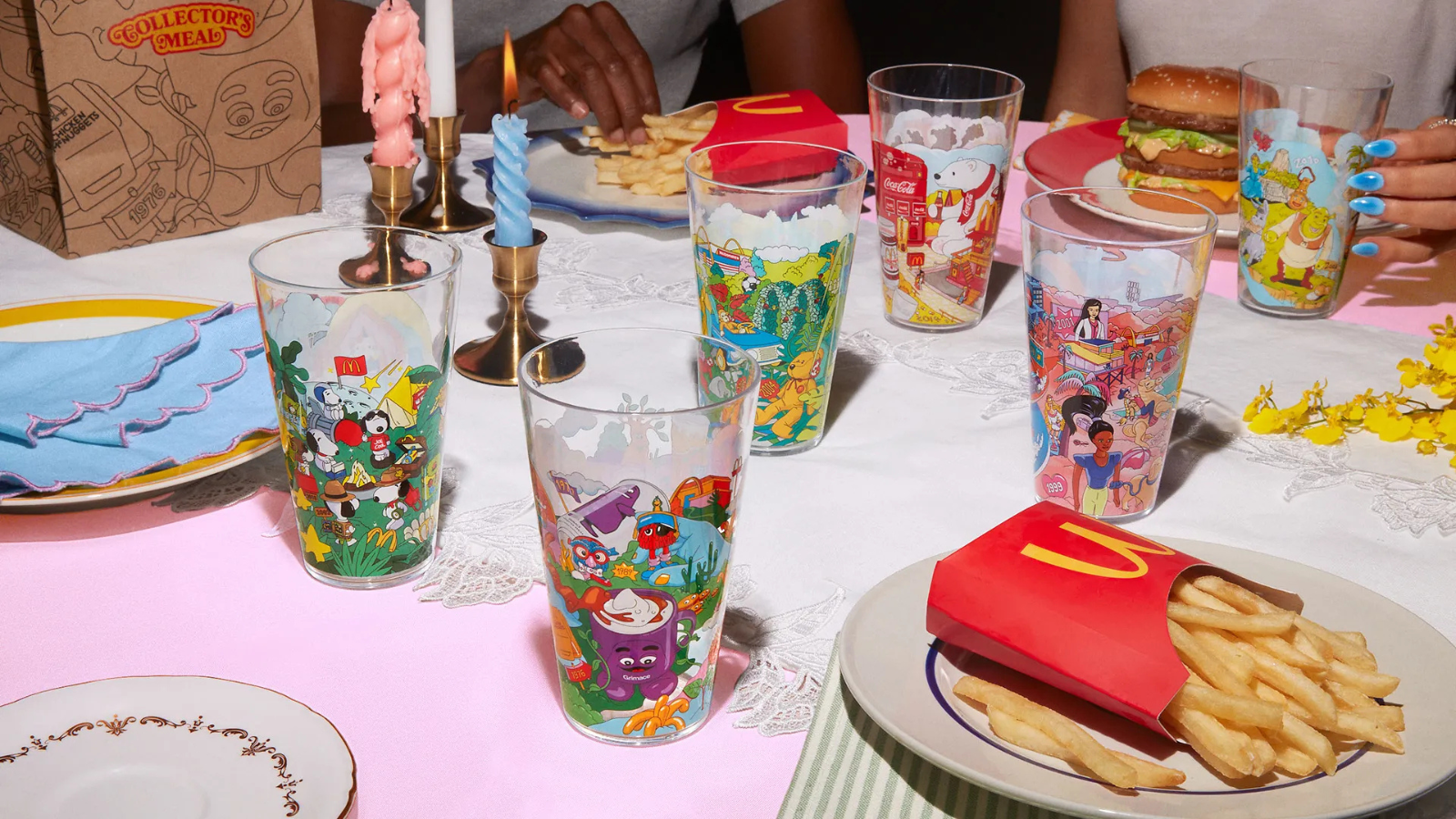
McDonald’s Collector’s Meal revived the joy of childhood collectibles with limited-edition cups celebrating beloved characters and cultural icons.
For Millennial parents, nostalgia can take on an additional meaning. Rather than simply revisiting their own childhood, some are looking for ways to recreate the experiences they remember for their children. They may want to share the freedom, spontaneity and simple pleasures they associate with growing up in the ’90s, from neighborhood adventures to family movie nights and favorite snacks. They’re not necessarily trying to recreate the decade exactly, but to pass along the feeling of it.
For food and beverage brands, both motivations matter. A childhood snack might be something a Millennial buys for their own enjoyment or something they introduce to their children as part of a new family tradition. In either case, the product represents more than a familiar flavor. It becomes a way to reconnect with an experience that carries personal meaning.
The appeal of a collectible, game or childhood favorite can extend beyond its original purpose. It may offer a moment of joy, a connection to a familiar world or a way to share an interest with others. And while Millennials may bring their own memories to these experiences, the desire for play isn’t unique to their generation. Life stage helps shape the meaning, too: the same product can be a personal indulgence, a shared hobby or a way for a parent to introduce a child to something they once loved. Brands can design for these different ways of engaging with play by looking beyond age to understand what people want from the experience and creating ways for longtime fans and newcomers to enjoy it together.
Gen-Z: Identity, connection and a sense of control
Gen-Z’s relationship with nostalgia can look quite different. Having grown up in an increasingly digital world, surrounded by algorithm-driven discovery and rapidly shifting aesthetics, younger consumers have access to an almost unlimited library of cultural references. But having access to everything doesn’t necessarily mean feeling connected to something.
Rather than revisiting their own memories, some are borrowing from the past to construct their identities in the present. They’re finding inspiration in older music, vintage fashion and analog experiences that offer a sense of individuality or connection to a particular cultural moment. As mainstream aesthetics become increasingly interchangeable, looking backward can become a way to develop personal taste and express what matters to them.
There’s also an element of control. Choosing how to engage with culture, rather than simply consuming whatever an algorithm serves next, can make familiar or outdated experiences feel unexpectedly relevant.
Where Millennials may be reconnecting with something they remember, Gen-Z may be discovering something they want to make their own. The implication for brands is important: two consumers can respond to the same nostalgic reference for entirely different reasons.
We see this tension most clearly when brands revive a familiar look without giving people a reason to care about it. Nostalgia’s potential lies in helping people build a connection in the present. Brands should understand which details hold meaning for longtime fans and where newcomers have room to put their own stamp on the experience. The more revealing question isn’t simply what people recognize, but what they can make it mean for themselves.
It’s not just how nostalgia looks. It’s how it feels.
When brands think about nostalgia, the instinct is often visual: bring back the old logo, reintroduce the original colors or revive a familiar mascot. But nostalgia’s appeal can extend far beyond aesthetics.
Look at the renewed interest in physical media and analog experiences. In a world where music is available instantly, some younger consumers are choosing vinyl records and CDs. Where smartphones make photography effortless, film cameras introduce a slower, more deliberate process. Even wired headphones have become a purposeful choice for some consumers.
We see these behaviors as a desire for more deliberate participation in everyday experiences. What people value may not be the technology itself, but the experience of engaging with it. There’s a meaningful difference between scrolling through an endless playlist and selecting an album to listen to from beginning to end. The physical interaction can create a sense of participation that digital convenience sometimes removes.
We look across categories and disciplines to understand what makes experiences meaningful, and neuroaesthetics offers a useful perspective. The field explores how sensory perception, emotion and meaning interact in shaping aesthetic experiences. Applied to nostalgia, this provides a useful lens: a familiar sound, texture or image can carry meaning beyond its sensory qualities because of the associations people bring to it. For brands, understanding which details carry that emotional weight can help inform how they are brought into new experiences.
That connection helps explain why nostalgia can be so difficult to capture through visual cues alone. Research on odor-evoked autobiographical memory, for example, has found that smells can evoke emotionally vivid memories and a strong feeling of being transported to an earlier moment.
For food and beverage brands, the sensory dimension is especially powerful. The smell of a familiar snack, the texture of a package or the unmistakable sound of opening a particular beverage can carry associations with people, places and occasions. These details can be as meaningful as the design consumers recognize, creating connections that extend beyond what they see on a shelf.
Nostalgia isn’t only something consumers remember. It’s something they can feel, hold, hear and taste. These experiences allow brands to become part of consumers’ personal rituals, giving familiar products meaning beyond visual recognition.
The nostalgia trap: Borrowing the look without understanding the love
As nostalgia continues to influence brand expression, there’s a risk of confusing familiarity with relevance. A recognizable design might attract attention and a discontinued product might spark excitement, but neither guarantees consumers will care beyond the initial novelty.
A mistake we see brands make is recreating the look of a beloved product without understanding what people loved about it. Its meaning may have come from its quality, the ritual of using it or the memories tied to a particular moment. When those qualities disappear, a familiar look can fall flat. Our advice: Identify what people want to experience again and let that guide what you bring back.
For Gen-Z consumers who never experienced the original product, nostalgia alone may offer little reason to choose it. The brand needs to create meaning for an audience that doesn’t have the same memories or emotional associations.
Nostalgia can be an effective creative tool, but it isn’t a substitute for a compelling brand proposition. The challenge is to distinguish between what people remember and why it mattered, then determine whether that meaning still has relevance today.

Kellogg’s brought back toys in cereal boxes through its Toy Story 5 partnership, reviving a childhood ritual for longtime fans while introducing it to a new generation.
Turning nostalgia into meaningful brand growth
For food and beverage leaders, nostalgia’s staying power creates opportunities to strengthen brand equity, reach new audiences and build consumer connections. Whether your core audience is Millennials, your growth target is Gen-Z or you’re looking to engage both, realizing that potential starts with understanding what each audience finds meaningful in the past and wants to carry forward.
Before investing in a nostalgic revival, brands should consider three questions.
What are consumers really seeking?
Before reaching for familiar design cues, consider the underlying emotional motivation. Are consumers seeking comfort, connection, play, identity or greater control over their experiences?
The answer matters because those needs suggest different directions for a brand. A familiar food product might create a moment of uncomplicated enjoyment for a Millennial, while a Gen-Z consumer might discover that same brand through a contemporary cultural collaboration or shared experience.
The design response should follow the human insight, not the other way around.

What does our brand authentically have permission to bring back?
Not every nostalgic moment belongs to every brand. Heritage can be an advantage, particularly for established CPG brands with decades of recognizable assets and consumer relationships, but history alone doesn’t guarantee relevance.
Brands need to identify which elements of their past still carry meaning. That might be a distinctive package shape, a recognizable character, a signature flavor or a ritual associated with a particular occasion. Understanding what deserves to be preserved and what needs to evolve allows brands to build on their equity without becoming constrained by it.
What are we giving consumers that matters now?
Nostalgic ideas can do more than remind people of something. They can create a new benefit, experience or connection that feels relevant today.
For food and beverage brands, that might mean reimagining familiar packaging for contemporary shopping environments, reinventing a recognizable flavor around a new consumption occasion or creating shared rituals that connect generations.
We see particular potential when brands connect what longtime fans love with something new audiences can make their own. For Millennials, that might mean revisiting a familiar flavor or ritual. For Gen-Z, it might offer a first encounter worth sharing, collecting or personalizing. Our advice to food and beverage leaders: Identify what makes the original meaningful, then explore how it can invite fresh participation.
Rather than recreating the past as faithfully as possible, brands can preserve what made them meaningful while finding new ways to express that value for today’s consumers. This is where cultural intelligence, brand strategy and design can work together to turn nostalgia into something more enduring than a temporary spike in attention.

Polaroid’s The Camera for an Analog Life campaign tapped into a growing desire for more tangible, intentional experiences in an increasingly digital world.
The future of nostalgia isn’t behind us
Nostalgia’s staying power comes from its ability to meet needs that carry across generations: comfort, connection, play and a sense of identity. Millennials and Gen-Z may approach nostalgia differently, with one revisiting a familiar experience and another discovering it for the first time, but both can find something worth making part of their lives today.
For food and beverage brands, the next consideration is how to turn that emotional appeal into experiences people want to repeat. A revived flavor may spark interest, but the ritual, sensory experience or shared moment it creates can give people a reason to return.
We’re watching how brands give consumers a more active role in shaping those experiences by adapting familiar products to new routines, making everyday consumption more playful and creating rituals that travel across generations. We’re equally interested in how newer brands can meet those same needs through experiences that feel comforting or familiar from the first encounter.
As these expressions evolve, we’ll help brands connect cultural signals with a deeper understanding of what people value: which details to preserve, where to experiment and how to make an experience relevant to a new audience. The future of nostalgia will be shaped by what people choose to carry forward. Our role is to help brands understand what deserves to come with them and create room for what comes next.
The images included in this article are used under the fair use doctrine for commentary, criticism, and educational purposes only. All rights to these images remain with their respective copyright holders.
ABOUT LPK
LPK is a branding agency that helps established consumer brands evolve while protecting what makes them meaningful. For more than 40 years, we’ve combined consumer, category, cultural and company insight to uncover what people value, shape brand strategy and create visual identities and packaging design that build on existing brand equity while connecting with new generations.
We’ve partnered with brands including Modelo, OLIPOP and Pillsbury to translate cultural insight into relevant brand experiences, strengthen consumer connections and create new opportunities for growth.