

Have you ever wondered what it would look like if a skincare brand launched supplements? Or if a yogurt brand started making beauty products?
Those are exactly the kinds of questions our team explored recently through a series of speculative brand stretch exercises.
As growth becomes harder to unlock through incremental innovation alone, brands are under pressure to find new opportunities without losing what made them successful in the first place.
One strategy gaining momentum is brand stretch, where a brand leverages the meaning and credibility it has built in one category to earn relevance in another. The question is not whether a brand can launch something new. It’s whether consumers will believe it belongs there.
While many businesses are focused on optimizing existing portfolios rather than expanding into new categories, examining the outer edges of a brand’s equity can still be a valuable exercise. It can expose new opportunities for innovation, clarify what a brand truly owns in consumers’ minds, and inspire fresh thinking across marketing, branding, and packaging design.
At the end of this article, we’ll share a simple framework for evaluating when a category extension has a high likelihood of success. But first, we’ll explore a series of speculative concepts that imagine where that logic could lead.
Through category trend analysis in the beauty space our strategy team identified six shifts shaping consumer culture today. Our designers then translated them into fictional but strategically grounded concepts through brand strategy and packaging design exploration.
Below are a few of those examples demonstrating how emerging consumer trends can inspire unexpected opportunities for brand growth.
Trend Space 1: Beauty Starts Within
Beauty is increasingly being reframed as a reflection of internal health rather than external correction. Skin, sleep, stress, gut health, and inflammation are becoming part of the same conversation.
This shift creates an opening for certain beauty brands to move beyond topical products and into ingestible wellness.
Which led us to wonder: What if La Mer expanded from luxury skincare into edible beauty rituals?

La Mer has always transformed something raw and oceanic into something refined, sensorial, and luxurious. The opportunity here is not to just sell seaweed snacks. It is to translate marine science into elevated edible formats that support hydration, radiance, and renewal from within.
Within this same trend space, we explored a second concept: What if Summer Fridays turned skincare recovery into functional beverages?

Summer Fridays made its name by tapping into a universal feeling: recovery. Its first product, Jet Lag Mask, embodied efficacy and simplicity. It was about restoring balance when your skin, schedule, or routine felt off.
As consumers increasingly connect beauty outcomes to hydration, stress, sleep, and overall wellbeing, we saw a natural opportunity for its brand equity to travel into the beverage space.
As you can see, both concepts translate the same shift in different ways. Next, we move from inside-out wellness to a very different trend space: imperfection, expression, and undone beauty.
Trend Space 2: The Messy Girl Renaissance
After years of careful curation and clean girl aesthetics, consumers are embracing a more lived-in version of beauty. The Messy Girl Renaissance rejects rigid routines and an overly polished appearance in favor of spontaneity and emotional honesty.
This observation prompted an exciting exploratory: What if Aperol stretched from alcohol to effortless color cosmetics?

Aperol has always been about atmosphere. Its signature orange, golden-hour vibe, and carefree social rituals make it a natural fit for a beauty movement that values expression over perfection.
By translating those equities into lip oils, cheek tints, and bronzing mists, the brand extends what it already owns in culture. The product changes, but the mood remains the same.
We pushed this trend even further with a second concept: What if Zippo sparked a new form of imperfect makeup?
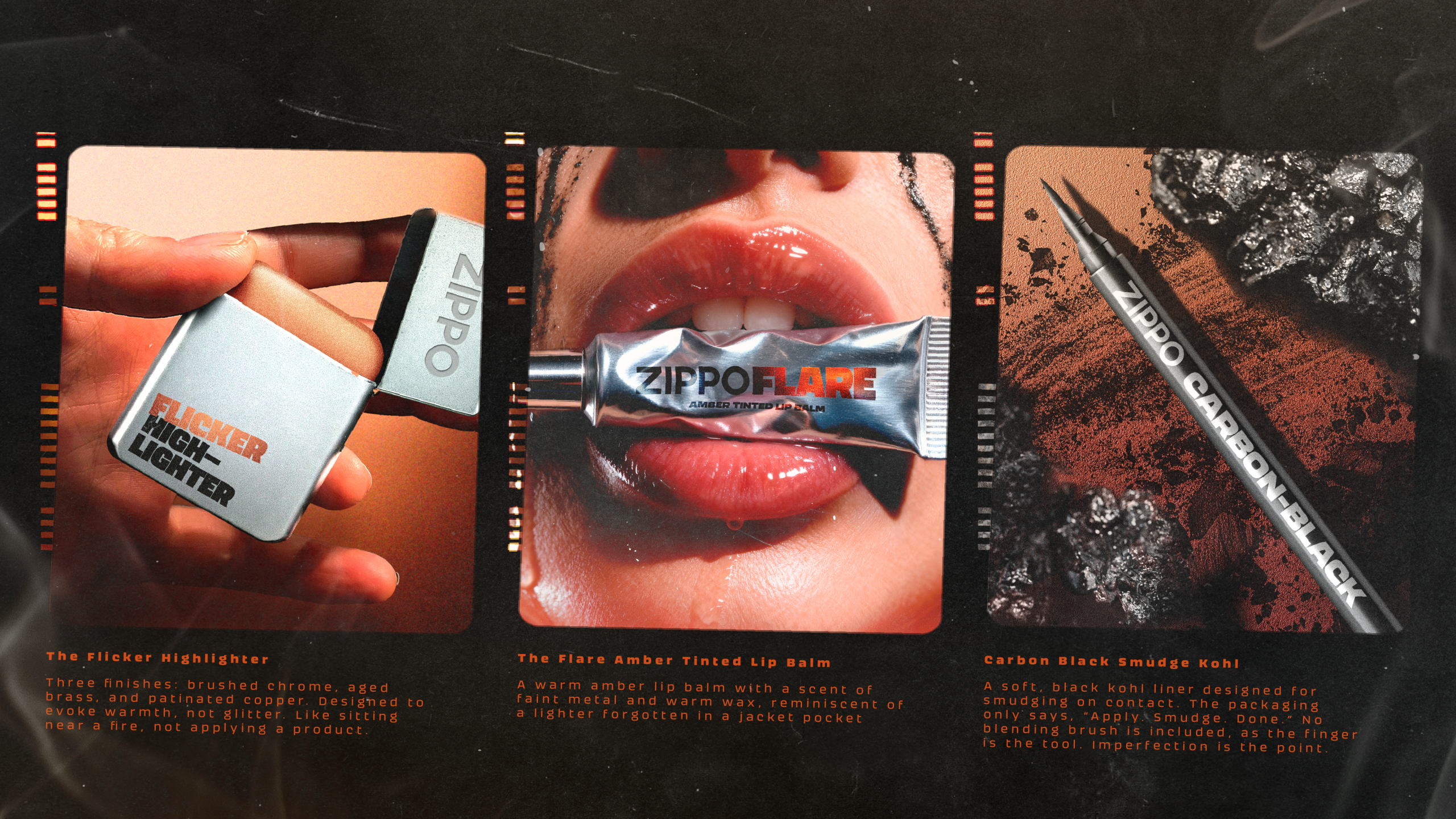
The Messy Girl consumer values authenticity, confident self-expression, and individuality. Those same qualities have defined Zippo for nearly a century.
In this concept, the brand’s iconic flame, worn metals, and analog rituals become the foundation for smudge-finish makeup designed to be applied without precision. The stretch works because it preserves the brand’s personality while giving it an entirely new aisle to show up in.
Trend Space 3: GLP-1 Aesthetics
The rise of GLP-1 medications is reshaping how consumers think about their appearance. Rapid weight loss and physical transformation is driving increased demand for solutions that support skin elasticity, facial volume, hydration, and hair health.
For some brands, this creates an opportunity to enter beauty. For others, it creates an opportunity to redefine what beauty support means.
Which led us to ask: What if Ritual expanded from supplements to GLP-1 beauty support?

With clinical studies, traceable ingredients, and a subscriber base already invested in internal health, Ritual has credibility to support the visible effects of rapid transformation.
Its equity in gut health, nutrient replenishment, and whole-body support creates a natural bridge into skincare designed for GLP-1 users, including elasticity serums, hydrating eye masks, and scalp treatments.
Looking beyond the supplement space, we explored a second possibility: What if Chobani transitioned from yogurt to recovery-focused skincare?
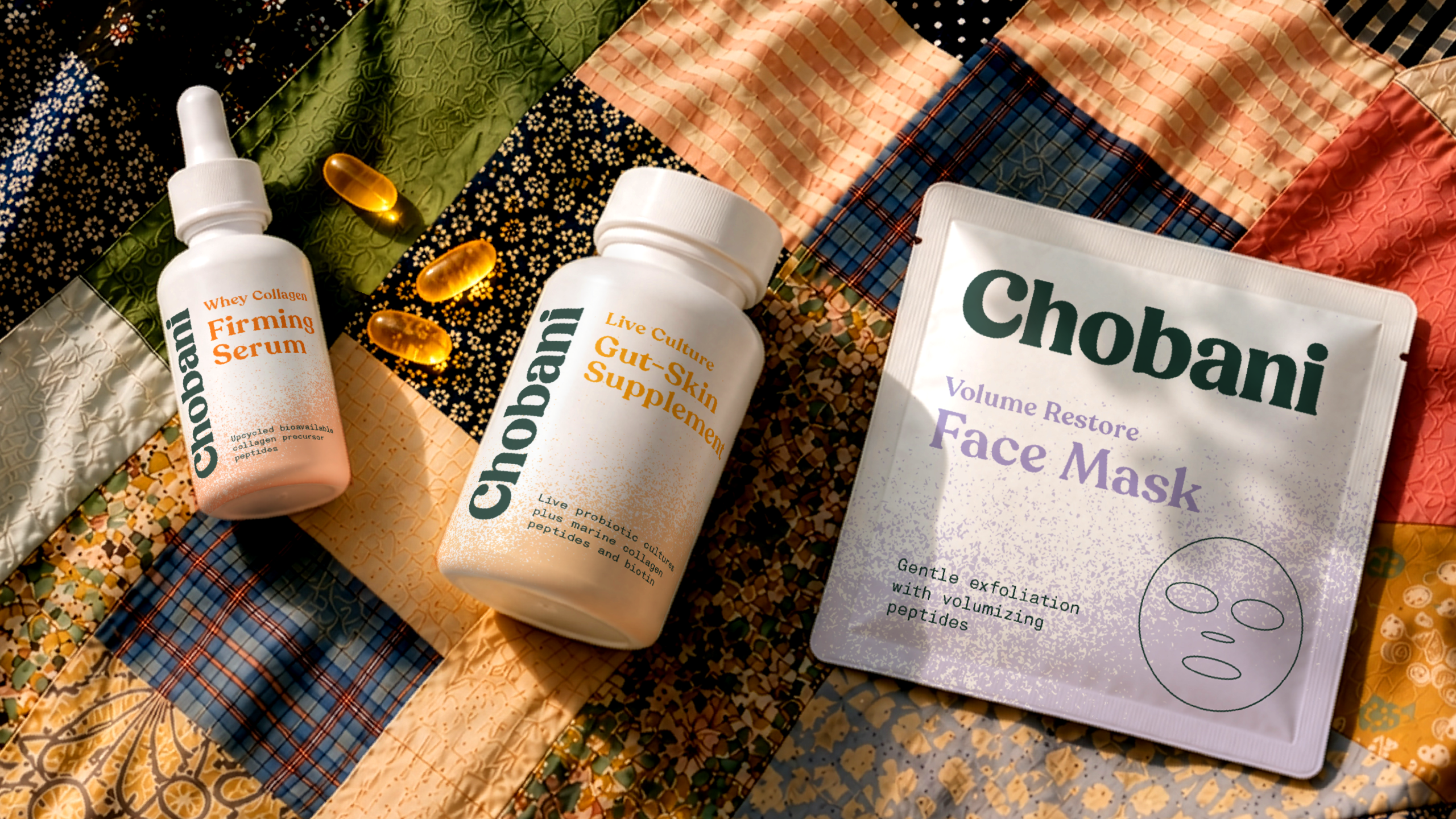
Many GLP-1 users already rely on high-protein foods to support their health goals, giving Chobani a strong foundation to build from. Its whey and casein processing naturally connects to collagen-supportive nutrition, including precursors like proline and glycine that help support skin elasticity and resilience.
In this concept, that ingredient equity translates into recovery-focused skincare designed to help skin keep pace with rapid transformation. The move works because Chobani is not borrowing beauty credibility. It is making its nutrition story visible on the skin.
Trend Space 4: Routine Control
Many beauty consumers are moving away from frequent product experimentation and 10-step skincare routines and toward simpler systems they can trust.
The objective is no longer about offering more products. It is about helping people make fewer decisions.
That sparked an interesting conversation around the question: What if Headspace moved from meditation app to stress reducing skincare?

Headspace has built its reputation helping people manage stress and improve wellbeing. As consumers increasingly recognize the connection between stress and skin health, the brand has an opportunity to extend its authority into skincare rituals designed around calm, recovery, and regulation.
The product becomes part of a larger system rather than a standalone solution.
The same consumer desire for simplicity inspired a second concept: What if RXBAR went from protein bars to ingredient-first skincare?

RXBAR transformed an entire category by putting ingredients front and center and eliminating unnecessary complexity.
That same philosophy feels increasingly relevant in skincare.
Consumers are looking for fewer claims, fewer products, and greater transparency. A skincare system built on radical simplicity feels like a natural extension of what made RXBAR successful in the first place.
Trend Space 5: Looksmaxxing
Male beauty is evolving from basic hygiene to intentional self-optimization. What started in niche online communities has gone mainstream, with men adopting structured routines across skincare, haircare, fitness, and even cosmetic procedures.
This shift reframes appearance as something to actively improve and manage, not passively maintain. But as optimization culture scales, brands must carefully position within it—balancing performance and confidence without reinforcing toxic or exclusionary ideals.
Which got us thinking: What if 5 Gum reinvented its chewing gum into a looksmaxxing product line?
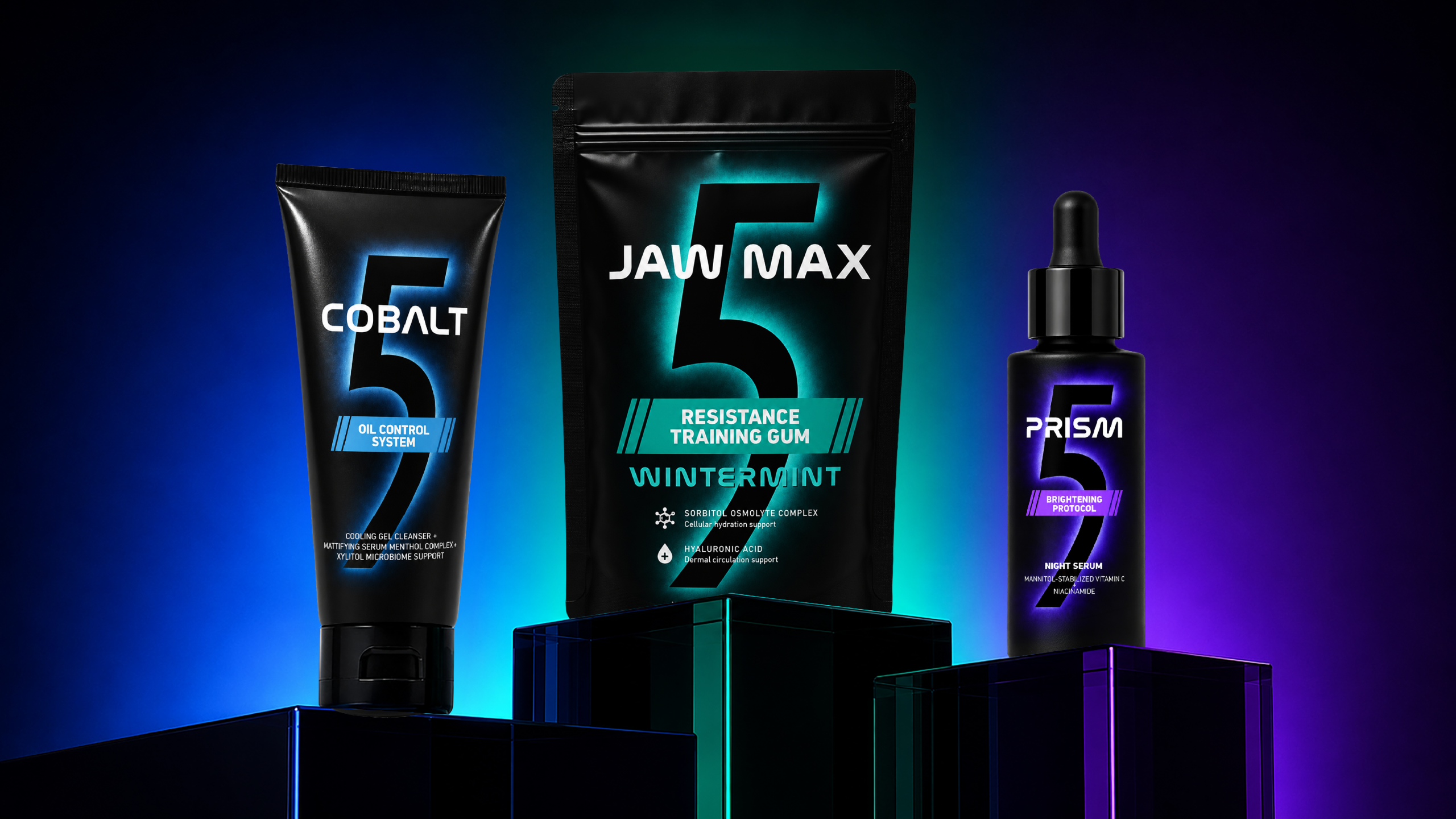
5 Gum’s brand identity is built around intensity, activation, and sensation. The cooling, energizing experience that defines the product translates surprisingly well into high-performance skincare designed for consumers seeking visible results and immediate feedback.
The cultural fit is less metaphorical than it first appears.
We also explored the outer edge of that idea: What if NASA went beyond space science into extreme-environment skincare?

NASA represents the ultimate performance environment. Decades of research into UV exposure, recovery, human physiology, and extreme conditions create a surprisingly credible bridge into skincare.
For consumers interested in optimization, few brands can claim a more rigorous scientific foundation.
Trend Space 6: Weekly Reset Rituals
Consumers are consolidating high-effort beauty routines into a single, intentional moment—often dubbed “everything showers” or “self-care Sundays.” Instead of maintaining daily, high-maintenance regimens, they’re batching treatments into one ritualized session that delivers maximum results with minimal daily upkeep.
This shift reflects a desire to optimize time, reduce cognitive load, and still show up polished in a visibility-driven culture. Beauty becomes less about constant maintenance and more about strategic, scheduled transformation.
That led us to explore: What if Saratoga transformed their mineral water into weekly beauty rituals?
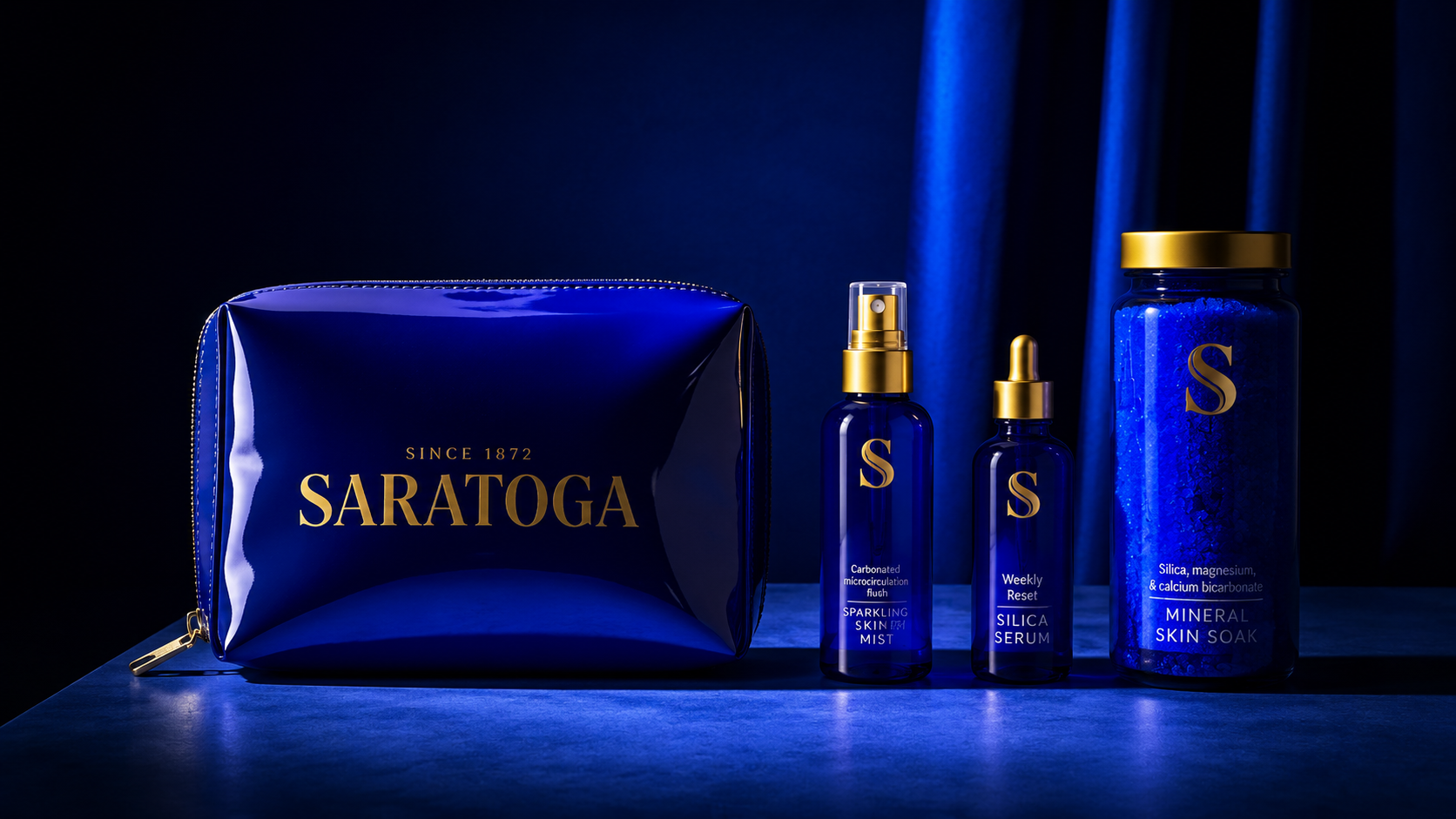
Saratoga’s iconic blue bottle already signals purity and premium quality. By translating its mineral-rich spring water heritage into beauty rituals, Saratoga can extend existing equities into a category increasingly focused on restoration and self-care.
Extending the idea even further: What if HelloFresh stretched from meal kits to curated skincare regimens?

At its core, HelloFresh is not a meal company. It is a system that removes friction and helps consumers prepare for the week ahead.
That same equity can be applied to beauty through curated kits, turning skincare into a structured ritual rather than a cabinet full of products.
Now, none of the concepts we shared above started with a product idea.
They started with a tension in culture, a shift in behavior, and a brand with equities that could be interpreted in a new context.
The most successful category extensions are rarely built from scratch. More often, they are built by reimagining what consumers already know, trust, and value about a brand.
The Brand Stretch Conditions Framework
The purpose of this exercise wasn’t to predict what brands will do next. It was to explore a more useful question:
Under what conditions can a brand’s equity successfully travel from one category to another?
In our work, the answer often comes down to three dimensions: consumer, culture, and category.
Consumer conditions
Does the audience already hold a strong enough association with the brand to extend trust into a new space? Has the brand earned approval in their minds, or does the move require too much of a cognitive leap?
Cultural conditions
Is there a broader shift, tension, or behavior that makes the move feel timely and relevant? Does culture reward this kind of expansion, or would it read as opportunistic or forced?
Category conditions
Is the destination category structurally open to a new entrant with this brand’s equities? Are the visual codes, claims, conventions, and competitive dynamics compatible with what the brand naturally expresses?
A stretch becomes more viable when all three conditions are sufficiently true.
Mapping those conditions helps clarify not just whether a brand should stretch, but how it should stretch, what may need to be built first, and what risks to manage along the way.
Sometimes the answer is a new product. Sometimes it is a campaign, partnership, retail experience, claim, or a new expression of the brand.
If you’re searching for whitespace, evaluating new growth opportunities, or looking for a partner to help your brand evolve while staying true to its core, we’d love to continue the conversation.
Images are for commentary and strategic exploration purposes only. Concepts are not affiliated with or endorsed by the brands shown.
ABOUT LPK
LPK is a modern brand strategy and design consultancy specializing in food, beverage, beauty, and wellness. We help brands define positioning, build distinctive identities, and design packaging and experiences that drive relevance, differentiation, and growth.